
Introduction
Deep, relevant, retrospective, and thoughtful.
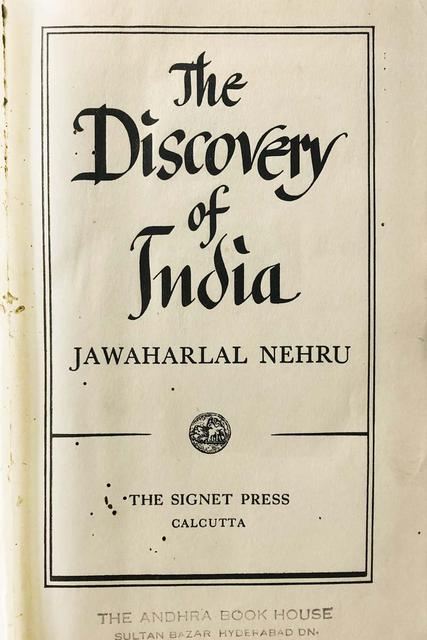
Elaborates on everything, written from jail — a mammoth 800-pager is off the shelves, at least for me — this one goes by the name The Discovery of India by Pandit Jawaharlal Nehru.
Politics, history, religion, empires, trades, policies, human development, even the metaphysical mysteries — Pandit Nehru dives into everything. He tries to understand India and its subtleties.
The below excerpts are based on my understanding of this book. These notes can noway do justice to realize the essence of the book unless you read it.
I would say this book opens a window to Nehru’s experiences.
Ancient Civilizations and Early India
The book takes you through the empires, kings, and history of exchanges. This gigantic note even sheds light on the evolution of Vedic influences, Hinduism, Jainism, and Buddhism.
Interesting to note, as per the book, how the south of India became the stronghold of Hindu orthodoxy owing to uninterrupted invasion of the north of India. The Mauryas, the Kushans, the Guptas, and in the south Andhras, Chalukyas, Rashtrakutas — all find a place in the book. These mentions enrich us with eras of dynasties and their continuation.
On politics — Nehru’s observation — if I got it correct: educated and not-so-one politicians do not make a difference in abilities — it’s all about thought process and the wisdom you have on the ground!
On wars — even if it sounds alien to conventional wars in our times — the wars in those eras in the vast lands of India adhered to certain rules, like minuscule interference with mass activities between people of warring states, exempting injury to harvests — interesting, isn’t it?
Though the book many a time bases itself on Aryan expedition while discussing history of India — the same theory has been debunked by recent findings! This takeaway from this book I am sure can be argued upon.
Caste System and Social Structures
Caste system in India — regressive and counterproductive to an ever-developing and revolutionizing world — this question always intrigued me endlessly — where this one originated, how this persisted? This book answers some of those questions — though I could not fathom or realize the reasons — blame on my nascent understanding of the subject. The book loops back to Aryan superiority and the categorization based on the work or expertise different groups of people adapted or adhered to. Question arises here — then why no one stressed these observations that caste can always be interchangeable based on expertise? In my limited understanding, I would say multiple invasions of India and the foreign forces tried their best to leave the caste system as it is to avoid unity among the people to their benefit — I am not sure!
Also, another worthy argument here can be to leave the fabrics of society as it is. Gandhi Ji tried in his own way; anyway, the result didn’t resonate with the effort to do away with the obstinacy of the system.
Religions and Philosophical Currents
The book eloquently enunciates the flow and the prevalence of major religions in ancient India – Hinduism, Buddhism, and Jainism. How the Mahayana and Hinayana forms of Buddhism coexisted and how Brahminism assimilated the former form of Buddhism. The book thoroughly investigates the facts, lore, and the contradictions.
India and China: Civilizational Dialogue
India and China — these two civilizational states take center stage in the first half of the book. Nehru seems to be admiring China’s way of survival, documenting historical milestones owing to notable travelers from the divine land to the western land, i.e., India. Be it Hiuen Tsang or Fa-Hien, every wanderer from China has done justice to document India’s culture, traditions, and the way of thinking — metaphysics and thought-provoking philosophies have been categorized into six broader labels.
My take here is that — though how China thought contemporary to Nehru’s times can be argued owing to the history of 1962.
Cultural Influence Beyond Borders
Number system, culture, art, and languages — India’s influence was pervasive throughout Southeast, Western, and Central Asia. Numbers, or ‘hindash’ as they still call it in Arabic, traveled from India via Arabs to Europe.
Medieval Transitions and Power Shifts
The book explains the Arabs to Timurs and to the Mughals — Babar’s invasion of the north of India. This is interesting — owing to the debates surrounding the history of India we always have. And Genghis Khan finds a mention, and the Mongolian dominance which erased a bit of history in Central as well as West Asia.
While the Sultanate of Delhi and Babar from the Timurid line fought the Battle of Panipat — arguably India’s fate took a definitive turn for centuries to come as Babar turned victorious. Interestingly, it was not that the Sultanate was weak; it’s about the new and improved version of artillery Babar put to use. Ironically, this period didn’t augur well for scientific warfare development — the lag continued to persist. While all this was taking place, in the south Vijayanagar was flourishing with art, culture, welfare, and abundance of life. Even foreign travelers sang adage to this great city and compared it with Rome and modern advancements not seen anywhere in the contemporary world.
Here is my take — the lack of documentation, and also devastations of the records owing to foreign invaders, e.g., destruction of Nalanda — India lost the link to the great legacy she possessed, though recent and continuous emphasis on the past is favorably leading to findings and discoveries.
Imperative to a novice like me, this piece surely encapsulates and provides eloquence around the tapestry of invasions this great land endured, assimilated, suffered, and in many cases absorbed the foreign expertise and knowledge — from the empires to the Huns, the Greeks, the Sultanates, the Afghans, the Mughals, the last one, the British. India has been an eccentric power in terms of tolerance of alien cultures. The Author emphasizes lackadaisicalness on our part to learn from the history of coercions and forced cultures, and that of development in science and further advancements. For most of the part, Europe for a fact was lagging behind India in this avenue — nevertheless, ramped-up efforts on their part were visible starting the initial years of the 20th century.
The British Era and Colonial Strategy
And now the British.
Nehru, in all his humbleness, in this book, resenting the racial exclusive approach of the Britishers, takes an example of cricket clubs — how the plunderers and invaders spared no effort to divide the team names based on religions and then exerted their superiority on other teams while naming themselves as Bombay Presidency. Even the administrative class, then called the ICS groups, indulged in their own sphere; even the Indian ICSes were not welcomed to the exclusive clubs. even the English historians note that the Industrial Revolution accelerated in England in 1770, and this is post-1757 of Plassey (Palasi) — so the loot had an immediate impact! And the ‘loot’ even became an English word!
Reflections : Rabindranath Tagore
Interesting observations of Rabindranath Tagore, which find a place in this book — Tagore writes the cultural and multifold impact of English would eventually result in profound tragedy, and this he writes on his eightieth birthday. He is aghast at the fact how the so-called advanced and modern thought of liberalism outburst of then of the invaders was put to rest when national interest and exploitation were to be first in the queue.
1857 and Divide-and-Conquer
This excerpt from the book is intriguing.
Mutiny of 1857, one of the very first attempts towards independence, had a great impact on the style of British operations in India. This someway expedited the fissiparous activities taken up by the imperialists, sowing discord between segments of societies, creating opacity between civilians and the armies to avoid any further disruptions. This is well noted and elaborated in this book.
And the ‘divide and conquer’ rule by the invaders on religious lines is detailed in this piece — important to note that aggressors neglected Congress of then, who tried to base itself on national unity and nationalism which was directly adversarial to the idea of theirs. So they went ahead and backed these religious lines. If I am correct — the historical division of 1947 could ‘also’ be owed to these tactics.
Freedom Struggle and World War II
The quest for independence revitalized the masses, with Gandhian non-violence which argued for disarmament of the world and promoted harmony for humankind — did not resonate with the British. Churchill famously stated — England ceases to be a powerful empire when she leaves India.
India was paramount to British’s worldly domination, imperialistic presence, and more importantly to its economy. Important noting here that England prospered rapidly once the India occupation was taking place.
And then comes World War II. The mood was changing slowly among the masses — culmination of all sufferings, the wounds, the humiliations of a great civilization. The year was 1942 when the protests erupted all over India — not so non-violent nor with force — and as Nehru rightly points out — a force without arms against a force with arms — there ought to be no comparisons. But the protests engulfed across the nation; it surely did, with people having nothing to lose and a dream — a dream of being free from an authoritarian, imperialistic ambition. I suppose this is the first time post-1857 Mutiny something significant took place with expediency in mind.
And then comes the famine and the indifference attached to it by the then government of India surely paints a gory image of subversion and inexplicable inhumanity.
Tagore’s Warning and Final Reflections
Yes, India will be free, but as Tagore says from his deathbed — “what kind of India they will leave behind, what stark misery?” — this line in this book resounds in my head with all its weight and repercussions. India, battered, hurt, has risen for sure and lot more to do — remember —
“Sun rises in the east”!
The epilogue is interesting — Nehru contemplates about nature, life, and its intricacies. The rise of INA finds a place in the book, though not in details.
Personal Reflection
This is my first book in 2026, and what a journey this month has been for me — I felt I was in India of 1900s, literally.
When I was reading this book — I had and I still have many questions to be answered. I am quite puzzled — thankful to Pandit Nehru that he is asking all these pertinent questions. Whether these questions have been answered by the intellectuals of modern India — we need to investigate.
I recommend everyone should read this book to have a perspective of Nehru and to how the legacy would shape independent India.
Go ahead and pick this book — this one surely deserves a read from all of us.