
Day 2, 13th of March, 2026. Friday.
Settling in Shinjuku
We are settling in Shinjuku (or Shin-Okubo, the Korean town) for the next few days. We woke up early to a cold and quiet morning—you could hear a pin drop! The heaters and hot water were saviors for us, and the Japanese automated & heated toilets were a blessing (LOL—I was really thinking if I could afford these in Singapore, though I am not sure of the cost).
Today’s itinerary is Asakusa & the National Garden. We and the kids were ready in quick time with three layers of clothing: a thermal, a shirt, and the fluffy winter jacket.
We headed to a Family Mart nearby and were pleasantly surprised with the breakfast options on offer—Veg/Tuna/Egg/Chicken sandwiches, buns, shakes, juices, and, most importantly, hot coffee of all flavors. I bought myself an egg mayo sandwich with hot black coffee and got the sandwich heated in the store’s microwave.
We are all set, with our bellies full and endless excitement for the day ahead. We didn’t carry our stroller to avoid searching for elevators at each station or along our transit route, and also to find out if Tokyo stations are well equipped for strollers before carrying one.
We walked up to Shin-Okubo Station, which was just a 2-minute walk from the Family Mart and a 10-minute walk from our Airbnb. (Posting some random pictures I clicked in the morning.)
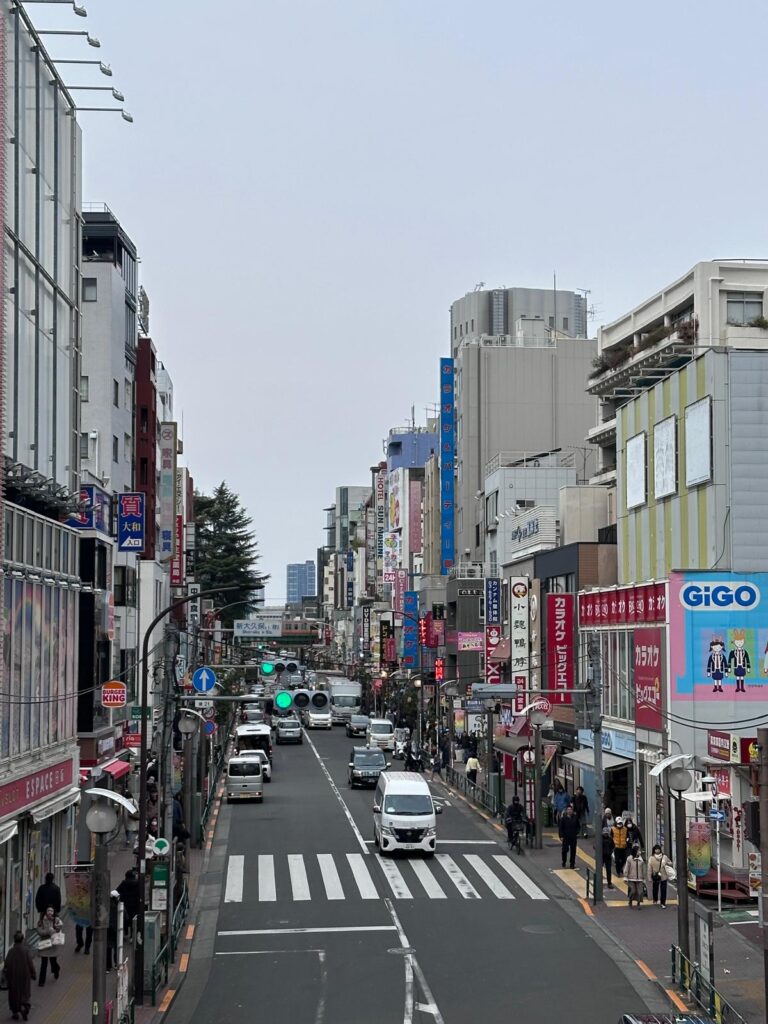
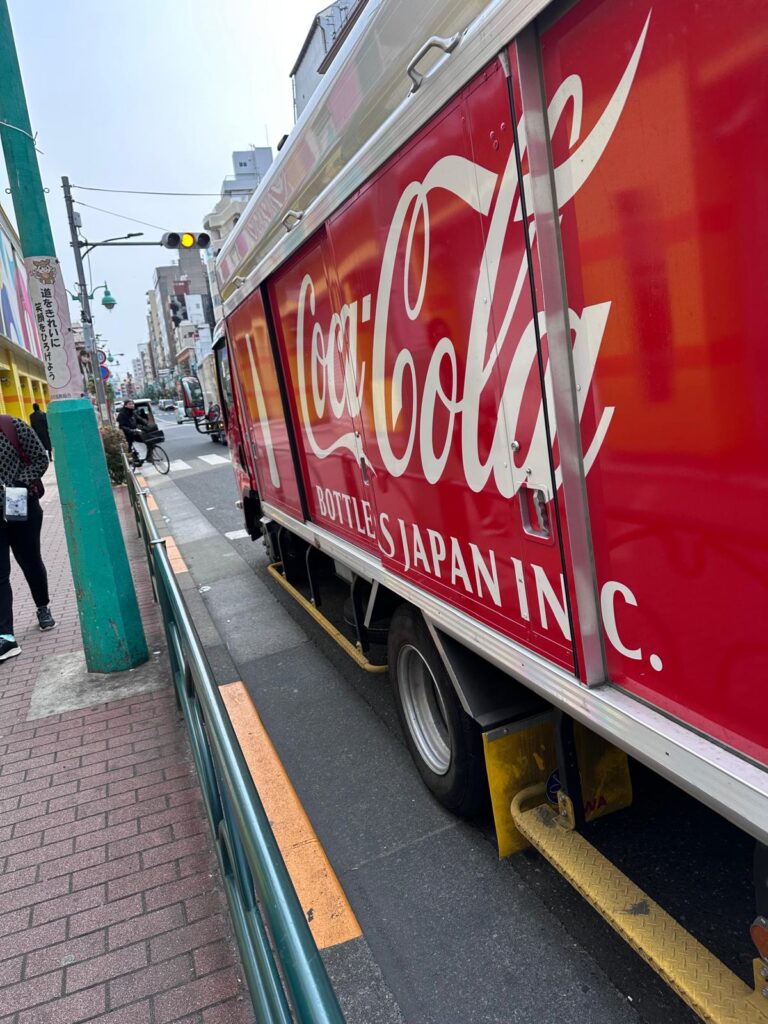
First Stop: Asakusa
First on today’s itinerary is Asakusa. We need to take the Yamanote and Ginza train lines; total travel time is ~40 minutes, and each fare costs slightly over 430 yen.
Now, a quick note about train lines and stations in Tokyo (albeit with a little help from wikis). Tokyo’s rail network (Greater Tokyo) is one of the largest and most complex in the world, boasting 800+ stations and 150+ routes, out of which Tokyo City has 290+ stations.
At first, navigating the routes felt like a herculean task. Google Maps was a bit of a breather, suggesting the exact routes and stations for transit. I thought of posting a map of Tokyo Central rail routes, not the Greater Tokyo area—nah, let me not overwhelm you with all those zigzag lines and stations. You can source it from the internet: Tokyo Train Map.
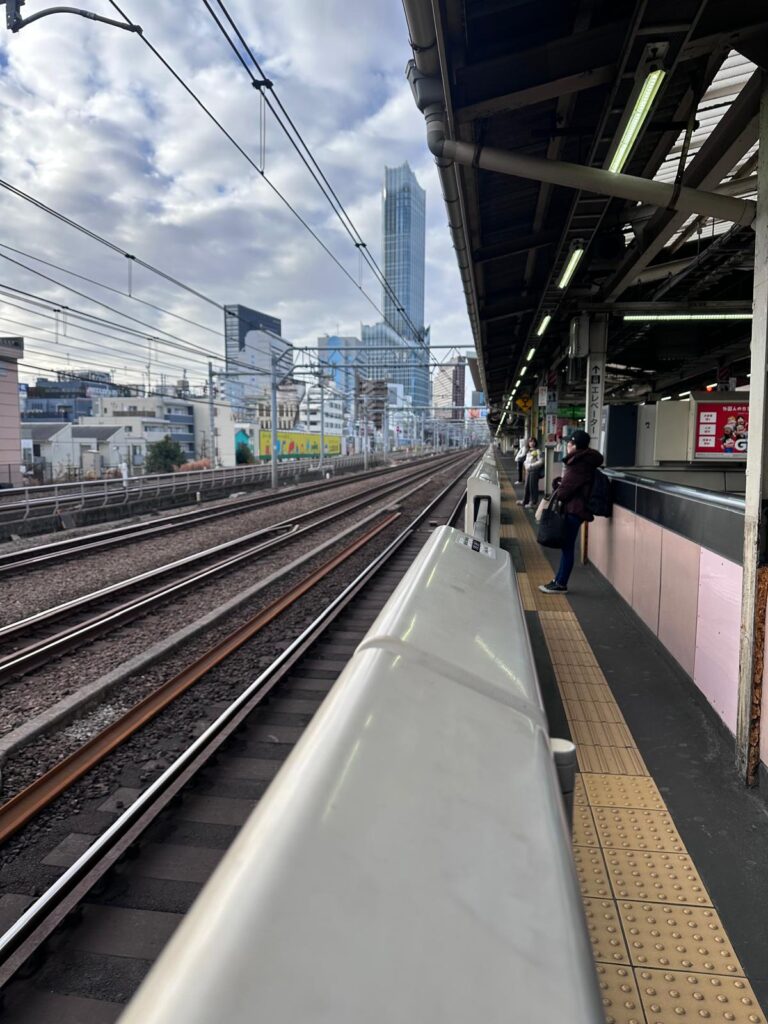
Anyway, we tapped our Suica cards at the automated ticket gates (IC card gates) and we were in! We needed to travel to Ueno Station via the Yamanote Line, and then from Ueno Station to Asakusa Station via the Ginza Line. (Posting a picture of the station.)
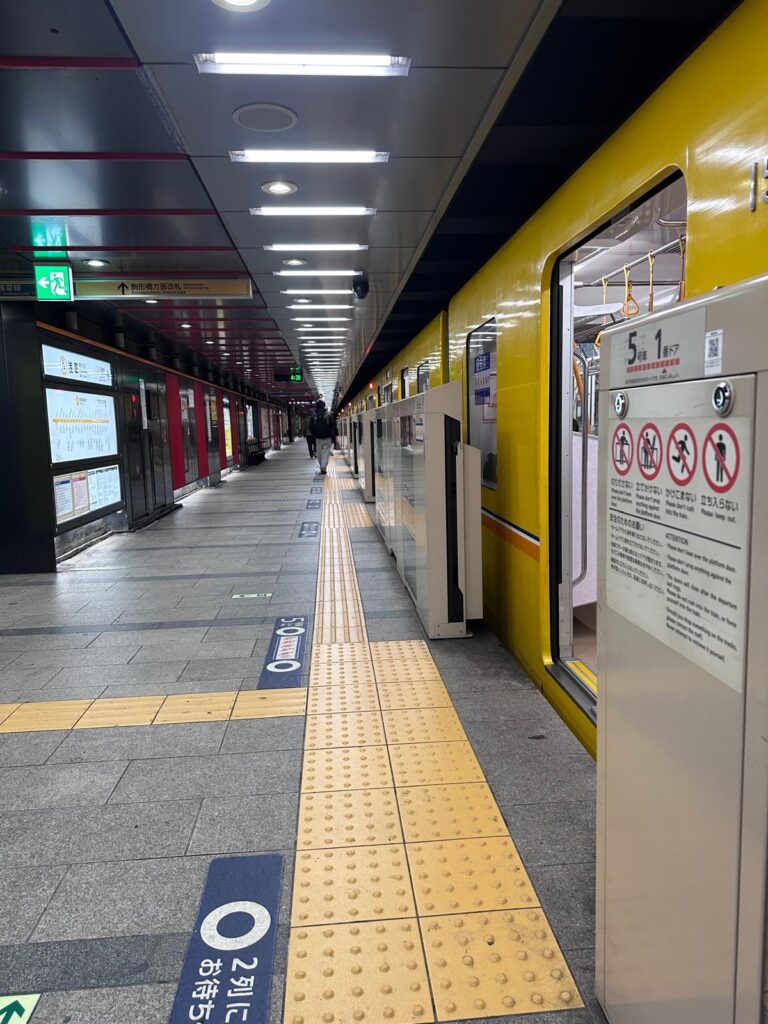
We reached Asakusa at around 11AM.
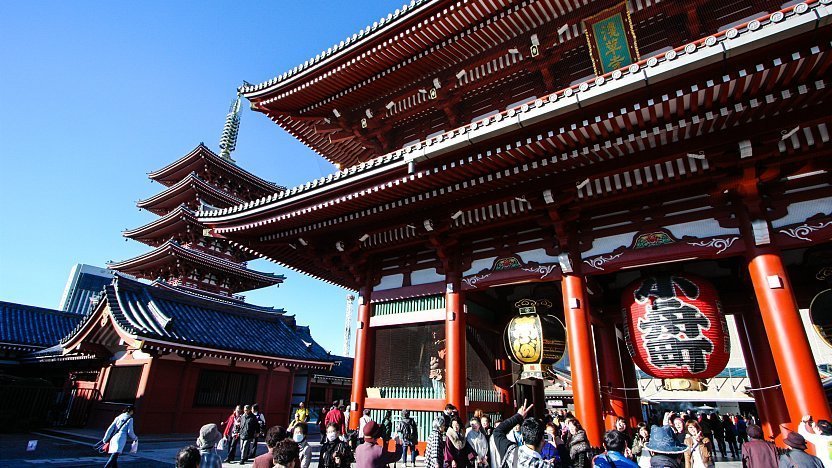
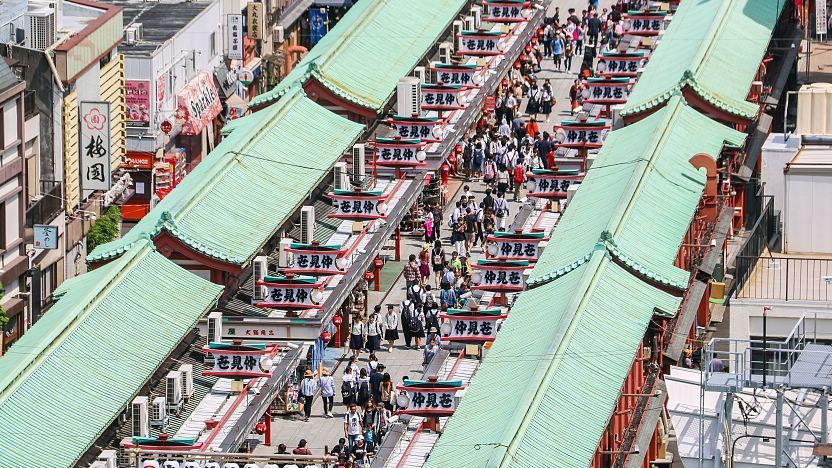
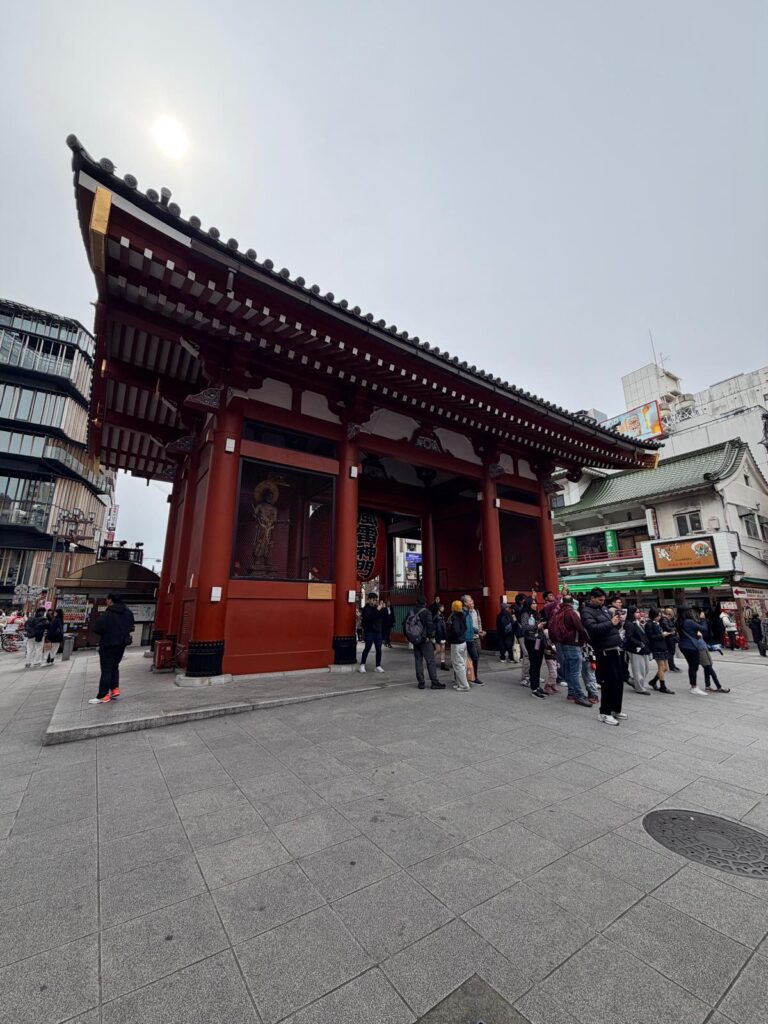
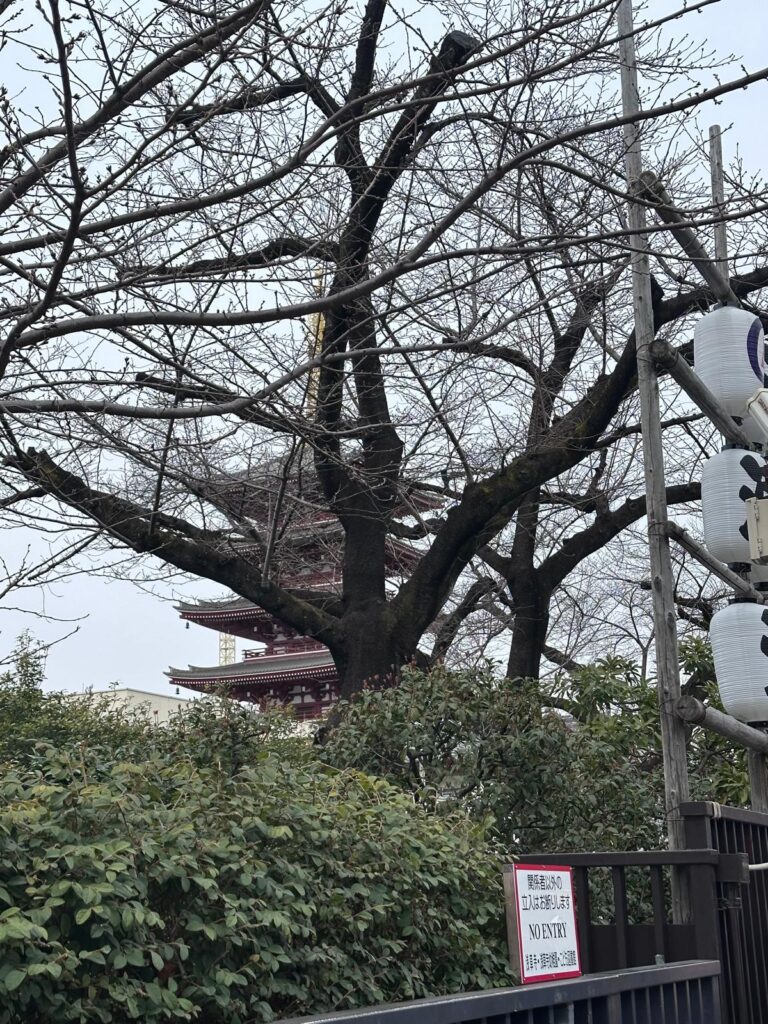
Asakusa is a district in Taito, Tokyo . It is known for Senso-Ji a Buddhist temple dedicated to the Bodhisattva Kannon. The legend says that in the year 628, two brothers fished a statue of Kannon , the goddess of mercy, out of the Sumida River, and even though they put the statue back into the river, it always returned to them. Consequently, Sensoji was built nearby for the goddess of Kannon. The temple was completed in 645, making it Tokyo’s oldest temple. When approaching the temple, visitors first enter through the Kaminarimon (Thunder Gate), the outer gate of Sensoji Temple and the symbol of Asakusa and the entire city of Tokyo. (Sourced from https://www.japan-guide.com/e/e3001.html.)
Exploring Asakusa and the Food Street
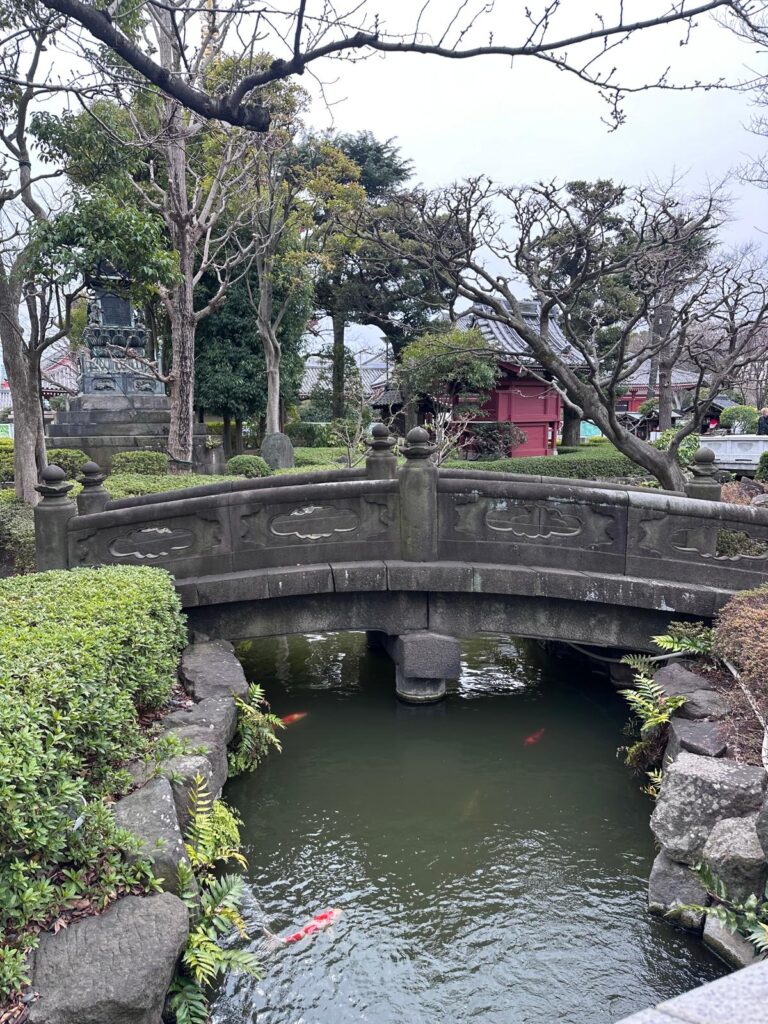
We ambled around the temple, enjoying the beautiful fountains and gardens built inside the temple campus—the kids even started playing around the gardens. Even amidst the bustle of tourists, one could surely feel the calmness surrounding the temple. I was amazed by the architecture and planning of this ancient temple.
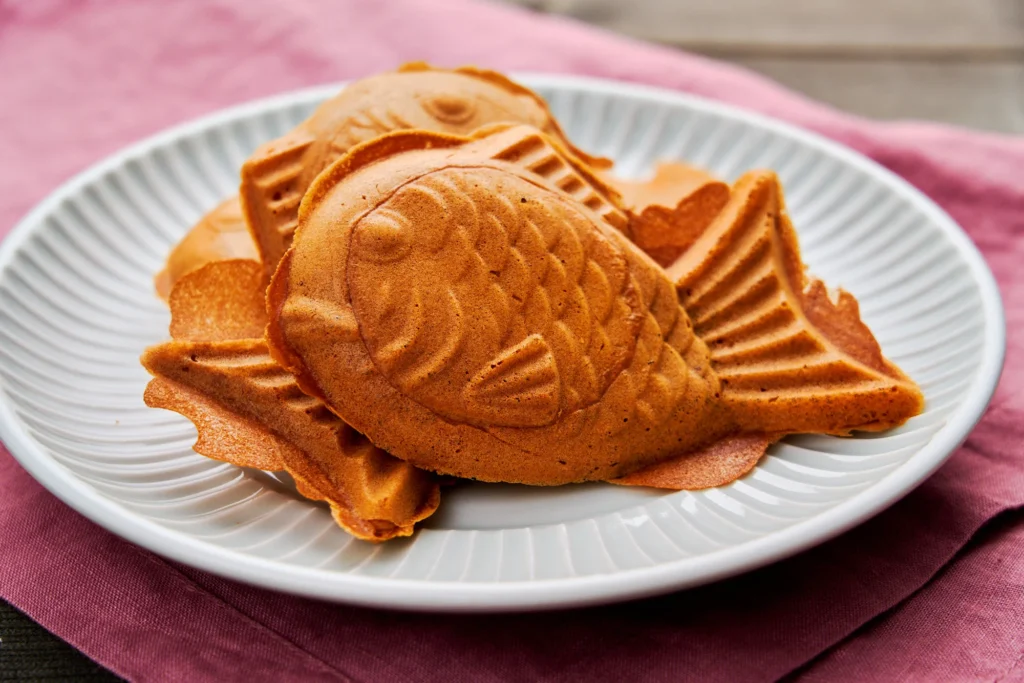
After spending some time at the temple, we proceeded to the food street nearby. It had a large number of food stalls—at some stalls, we noticed long queues. On the street, we got to try the famous fish-shaped Taiyaki, a popular Japanese delicacy, as well as Japanese soft ice creams. The kids were elated. The temple and this food street – makes the experience unique, and the lively buzz keeps you excited all the time.
Taiyaki is a Japanese fish-shaped cake, commonly sold as street food. It imitates the shape of tai (red sea bream), which it is named after. The most common filling is anko. Some shops even sell taiyaki with okonomiyaki, gyoza filling, or a sausage inside.(https://en.wikipedia.org/wiki/Taiyaki).
Shopping and McDonald’s Experience in Tokyo
When you start living in Singapore, unknowingly you pick up the habit of mall hopping or shopping street strolling—we are no different here. After savoring the street foods, we proceeded to a Uniqlo store nearby. It was huge—I would say gigantic compared to the ones I see in Singapore.
My friend needed to buy some thermals for his family, and I was surprised by the variety this store offered. Prices were a little lower than in Singapore, though not by much.
It was almost 4 PM, and we were famished. As usual, when you are super hungry, whatever eatery you see first tends to win— for us, it was McDonald’s, and for my son, what could be better than this choice! We ordered some burgers, kids’ meals, and sides like fries and nuggets. Selections were a bit different from what I usually see in Singapore—I ordered a Teriyaki burger, though I was looking for a McSpicy, one of my favorites back home.
Inside this McDonald’s, I could immediately feel the Japanese culture—the restaurant was unbelievably silent, and customers cleaned the seats after their meals by themselves! In Singapore, I am used to returning trays and disposing of leftovers in the trash bin, but I never thought I would care to clean my seat with tissues—a lesson learnt right there in McDonald’s!
Shinjuku Gyoen National Garden Visit
Our next stop was Shinjuku Gyoen National Garden. We started from Asakusa Station, taking the Ginza and Marunouchi Lines to reach Shinjuku-Sanchome Station, which took almost 45 minutes.
My younger kid was asleep, so we took turns carrying her, and we decided to bring the stroller starting the next day.
As the day went by, my son became more energetic instead of getting tired—this was a bit troubling for us (LOL)—inside the train, he continued chattering, and he was the only one talking in that train compartment!
We then walked about 10 minutes to reach the garden.
Garden Closed and Taxi Back
Alas! The garden was closed, and it closes at 5 PM! Blame our common sense for not Googling the closing hours of the garden. It was almost 6:30 PM, and we were exhausted—we couldn’t take another 30+ minute train ride back home to get some rest.
We decided to hire a taxi. If I remember correctly, it took us around 1,300 yen, and I paid with my credit card, as my Suica card had a low balance (though I always carry some local currency)!
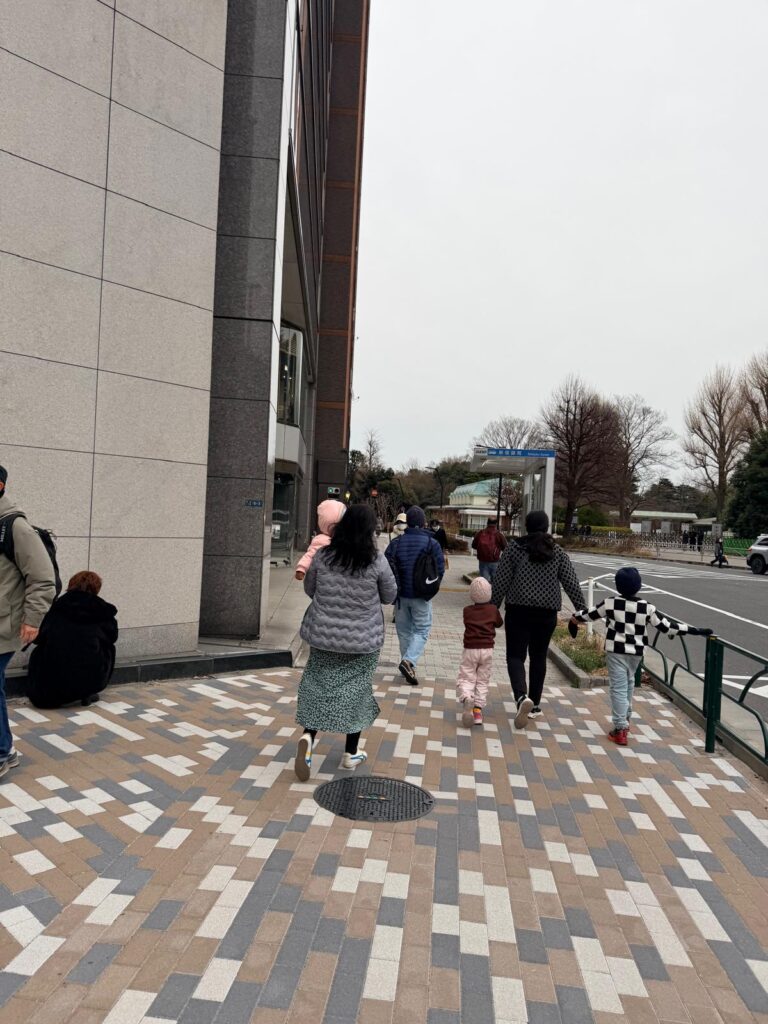
(Posting a picture as we are all walking to the garden to discover its closed..LOL)
Friday Night in Shinjuku
So that’s that for the day. The kids were back home, freshened up, and showered. My friend and I went out to get dinner takeaways—we got a bucket of Korean fried rice, a medium pizza, and some chicken wings. After dinner, the kids went to sleep, as did the moms.
And hey, it’s a Friday, and we are in Tokyo Downtown—the bars are not far away. Friday nights love those late nights, and not at all the dry ones! My friend and I are no different; we started exploring the bars and food streets of Shinjuku. We did not have to walk much and found a nice bar to munch on popcorn and gulp some chilled Sapporos.
This Tokyo night, as we saw on the streets, seemed endless, and the Tokyo night crowd was getting into the groove to welcome the weekend. Illuminated streets, numerous bars, pubs, and lounges adorned the Tokyo night.
We knew Japan works hard, but we discovered that they “party harder” on a freezing Friday night in the streets of Shinjuku!
Hey there, Thanks for reading this blog. Stay tuned for upcoming blogs on Day 3 till Day 12 – a blog for each day.
Till then – ganbatte!